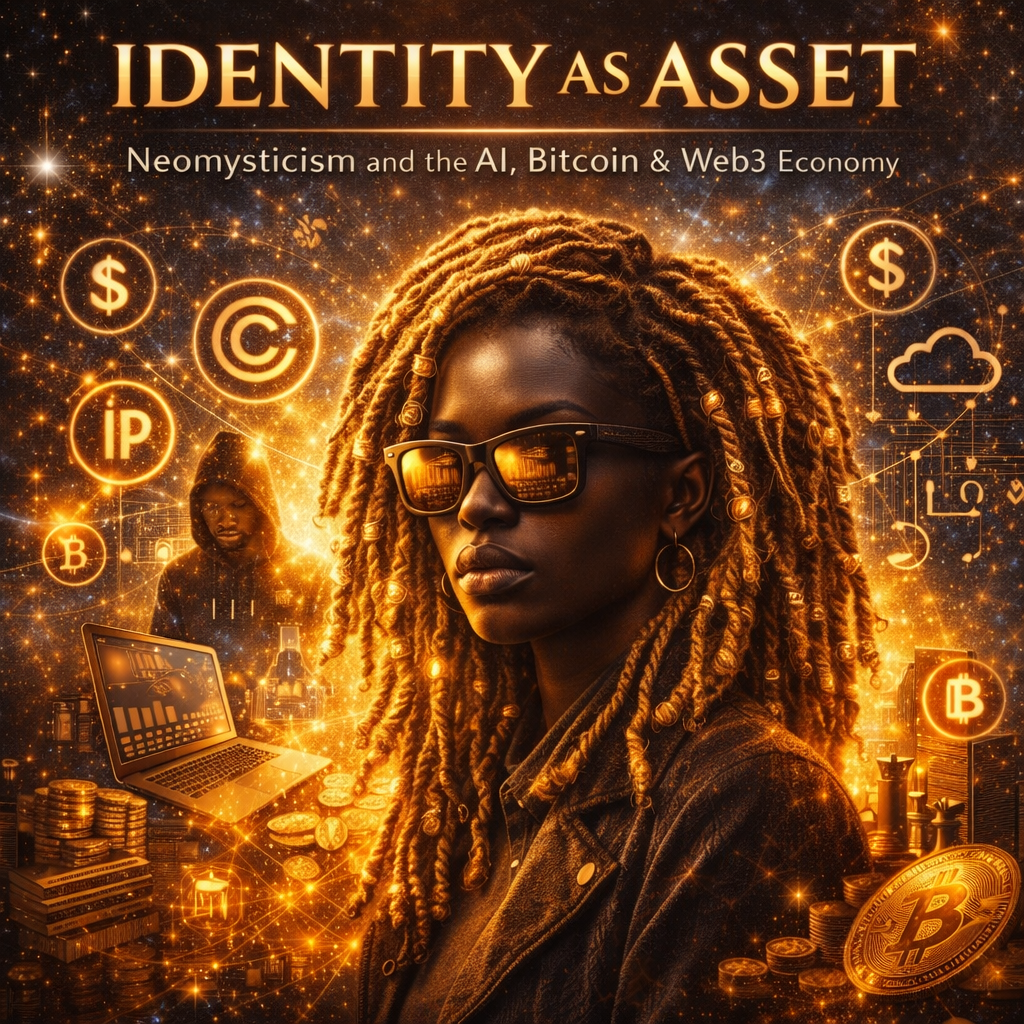
Neomysticism & Economic Adaptation | How Neomystics Operate in the AI Economy
How Neomystics Operate in the AI Economy
I — What Is Actually Happening in the Economy
We are not just witnessing technological advancement.
We are witnessing structural compression.
AI is:
- automating entry-level cognitive labor
- compressing creative production time
- reducing dependency on degrees
- replacing repetitive pattern-based jobs
- accelerating business execution
- Degrees are losing monopoly status.
- Traditional job ladders are flattening.
- Corporations are optimizing overhead.
- Information is abundant.
- Execution is automated.
The old promise was:
Study → Degree → Job → Stability.
The new reality is:
Adapt → Build → Own → Iterate.
The strongest are not surviving.
The most adaptive are.
II — The Neomystic Interpretation
A Neomystic does not panic at automation.
A Neomystic studies systems.
AI replaces repetition.
It does not replace:
- decision authority
- ownership
- identity clarity
- vision
- embodied leadership
Neomysticism understands something critical:
If cognition becomes automated, value shifts to:
- direction
- taste
- ownership
- control of assets
- signal clarity
Neomystics do not compete for labor.
- They position for leverage.
They do not cling to degrees.
- They acquire skills.
They do not fear automation.
- They learn to operate it.
They do not depend on employers.
- They build structures.
III — What the Neomystic Studies & Builds
This is where it becomes real.
Neomystic Operations include:
1. Intellectual Property (IP)
They learn:
- trademark basics
- brand positioning
- identity ownership
- content systems
- digital asset leverage
- Your name becomes IP.
- Your frameworks become IP.
- Your voice becomes IP.
- Your systems become IP.
Ownership replaces employment dependency.
2. Business Architecture
They study:
- cash flow systems
- digital product models
- service-based leverage
- equity structures
- holding companies
They stop asking:
“How do I get hired?”
They ask:
“How do I own?”
3. Adaptive Skill Stacking
Instead of relying on one credential, they build layered competence:
- communication
- systems thinking
- AI tool fluency
- strategic decision-making
- pattern recognition
- emotional intelligence
Adaptability becomes capital.
4. Identity Stabilization
In unstable economies, unstable identity collapses.
Neomystics stabilize:
- self-concept
- decision authority
- risk tolerance
- behavioral discipline
Because AI amplifies whoever you already are.
If you are scattered, AI multiplies chaos.
If you are coherent, AI multiplies scale.
5. Flow & Leverage
They study:
- attention economics
- audience building
- distribution
- ownership over visibility
- long-term brand equity
They understand:
Attention is currency.
Distribution is power.
Ownership is stability.
IV — How Neomystics Thrive in the AI Era
Here is the operational shift:
Instead of selling time →
they build
assets.
Instead of competing for jobs →
they create
leverage.
Instead of fearing AI → they
integrate
it.
Instead of relying on credentials → they prove execution.
Practical Moves:
- Learn one AI tool deeply.
- Build one monetizable framework.
- Trademark core brand identity.
- Develop distribution channel control.
- Study cash flow before aesthetics.
- Acquire equity when possible.
- Build systems BEFORE scaling.
The Neomystic understands:
Security is NOT employment.
Security is ownership.
The adaptive DO NOT survive by force.
They survive by restructuring.
V — Frequently Asked Questions
Are degrees becoming useless?
Not useless — but less exclusive. Skills and adaptability now outweigh credentials alone.
Is everyone supposed to become an entrepreneur?
Not necessarily. But everyone must understand leverage and ownership principles.
What is Neomystic Operations?
The strategic integration of identity, AI, IP, and economic ownership.
How does AI change opportunity?
It lowers execution barriers while raising clarity and direction requirements.
What becomes more valuable now?
Ownership, adaptability, strategic thinking, and brand identity.
What is the biggest risk in this era?
Remaining static while systems evolve.
What is the biggest advantage?
Building assets instead of trading time.
Join The Patreon For More Exclusive Content Here
Neomystic Entries